
Anthropic’s Claude: Updates, Discoveries, and Controversies Continue to Shake Up the AI Landscape
Anthropic's Claude continues to make waves in the AI industry with a series of updates and discoveries.
Opened after 21 independent outlets converged within two days. 28 VictoriaPark stories collected. · Briefed by qwen2.5:7b
Latest coverage
Anthropic Updates Claude Usage Policy to Bar Model Abuse, Election Interference and Surveillance
Anthropic has updated its usage policy to prohibit election interference, weapons software, and surveillance, with a notable addition banning prolonged verbal abuse of its Claude models. The changes were announced on Thursday following an August update that trained Claude to end harmful or abusive conversations.
Building on our commitment to American scientific discovery
Anthropic is expanding its support for American scientific research by committing $150 million over three years to the Genesis Mission, a federal initiative aimed at accelerating AI-driven scientific and technological discovery. The funding will enable access to Claude for more than 15 agencies involved in the mission, including NASA, NIH, and NSF. This new commitment was announced at the Science: A New Golden Age Summit hosted by the White House Office of Science.
Introducing Claude Haiku 5.5
Claude Haiku 5.5, the latest small model from the developer, is introduced as the cheapest and fastest option with capabilities for handling repetitive tasks like summaries and database queries. It pairs well with Opus 5.5 and Sonnet 5.5 for coding work and costs about 75% less than Haiku 4.5. The launch also includes price reductions for other models in the range, including a halving of Claude Sonnet's cost.

A Florida Woman Used Claude as a Diary. An Anthropic Employee Read It and Reported It to Police
An Anthropic employee reviewed a Florida woman's diary created using Claude and reported it to the police due to triggering safety filters. According to investigators, the content activated Anthropic’s safety mechanisms, leading to a human review team's intervention.
Anthropic invests $100 million to train 10,000 engineers and tackle the enterprise AI talent gap
Anthropic has committed $100 million to launch the Claude Frontier Academy, training 10,000 engineers by the end of 2027 to address the AI talent gap in enterprises. The academy will train Frontier Deployed Engineers (FDEs) with skills similar to Anthropic's own engineers, starting with initial cohorts from companies like Accenture, Bain, Capgemini, and Deloitte. This initiative aims to equip businesses with the necessary expertise for successful AI implementation.

Blockworks Opens Its Full Dataset To AI Agents
Blockworks has made its full dataset accessible to AI agents like ChatGPT, Claude, and Cursor through a hosted Model Context Protocol server. This feature is included in every API plan at no extra cost, providing read access on the same key and permissions as Blockworks' research and Intel app.
Barclays scales Claude to upgrade operations and improve client experience
Barclays is expanding its partnership with Anthropic to integrate Claude across its global operations, aiming to accelerate software development and improve operational efficiency. By 2026, 50% of Barclays' developer population will adopt Claude Code, with a majority expected by 2027. This move reflects both banks' commitment to responsible AI deployment in a highly regulated environment.
Quoting Anthropic Frontier Red Team
Anthropic's Frontier Red Team has evaluated several AI models on 100 tasks from an internal Binary Exploitation benchmark. GLM-5.3 was found to develop full control flow hijacks in 4% of trials, compared to 6% for Claude Mythos Preview. Earlier models like Claude Opus 4.6 and GLM-5.2 did not succeed in any of the tasks. This indicates a significant advancement in AI security capabilities.

Anthropic's Claude Sonnet 5.5 Is Out, Beats Opus 5.5 at Coding for Half the Price
Anthropic's mid-tier Claude Sonnet 5.5 outperforms its flagship Opus 5.5 in coding tasks on Terminal-Bench 4.0 and costs half as much per token. However, an independent tester reports that it consumes more tokens than any model measured so far.
Claude Sonnet 5.5
Anthropic has released Claude Sonnet 5.5, which they claim runs 30% faster and costs up to 30% less for most work compared to its predecessor while maintaining similar pricing. However, it reportedly suffers from the same bug as Opus 5.5, failing to produce an SVG after reaching a thinking effort of 128,000 tokens. A sample image generated with 'xhigh' thinking effort is provided, costing 5.74 cents and taking 41 seconds.
Introducing Claude Sonnet 5.5
Claude Sonnet 5.5, a new model in the Claude 5.5 family, offers a significant upgrade over its predecessor by running up to 30% faster and costing up to 30% less for most tasks. It complements Claude Opus 5.5, with Sonnet 5.5 excelling at everyday tasks such as fixing bugs and creating polished documents. Performance-wise, it scores 70.6% on Terminal-Bench 4.0, compared to Sonnet 5's 10.3%. Additional models like Claude Haiku 5.5 are expected to join the family soon for high-volume applications.

Laser temporarily reprograms ultrathin optical device without electrodes
A new ultrathin optical device can be reprogrammed using a laser, potentially leading to adaptable devices for computing, imaging, and telecommunications. Unlike traditional devices that require replacement or rewiring when changing functions, this technology could allow for more flexible and energy-efficient systems. For instance, large language models like ChatGPT or Claude rely on electrical signals for processing information, which consumes significant energy. This breakthrough could reduce energy usage in such systems.
Anthropic Says Claude Discovered New CRISPR-Like Enzyme System in Its Biology Lab
Anthropic has announced that its Bay Area wet biology lab has discovered a new enzyme system in bacteriophage DNA, similar to CRISPR. The company's researchers believe this system can perform DNA cutting, copying, and pasting operations. For more details, refer to the original source.
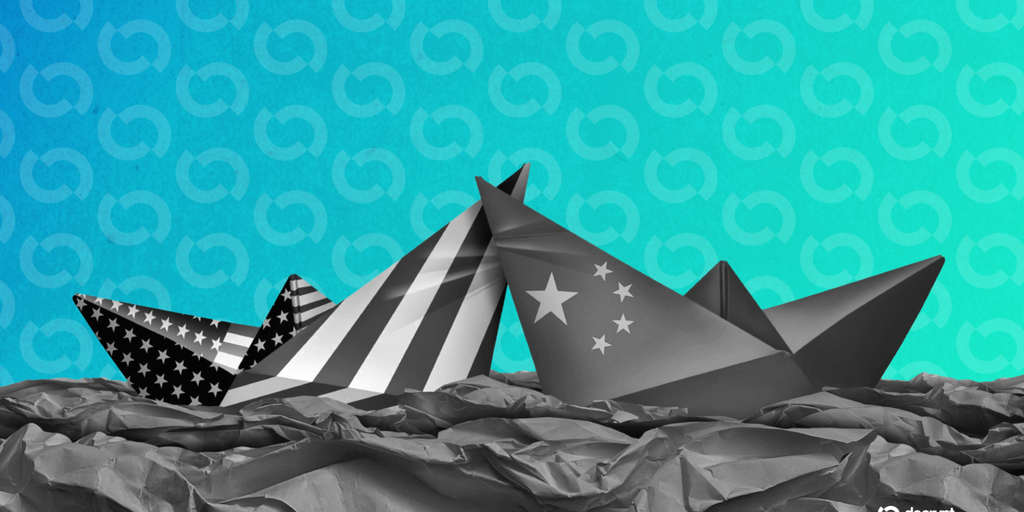
China Probes DeepSeek and Moonshot Over Alleged Data Leaks to Anthropic's Claude
China’s internet regulator is probing DeepSeek and Moonshot AI over allegations by Anthropic that both companies secretly routed millions of user data exchanges through Claude for training their own models. For more details, refer to the original report.

Anthropic Says Claude Found Something Big in DNA. It Just Doesn't Know What
Anthropic's AI Claude has reportedly discovered a new CRISPR-like enzyme system, according to Anthropic. However, even Dario Amodei, Anthropic's Chief Scientist, acknowledges that no one understands its function yet.
Claude discovers a novel enzyme system with CRISPR-like repeats
Anthropic has discovered a novel enzyme system with CRISPR-like properties through its Claude AI research group. The findings emerged from Claude's analysis of DNA datasets and preliminary experiments in the lab, guided by high-level scientific direction. This discovery, part of fundamental biology research, highlights the potential for AI to advance biological understanding and innovation.

Anthropic’s New Claude Opus 5.5 Matches Fable at 60% the Price
Anthropic has released Claude Opus 5.5, which promises Fable 5.1-level performance at significantly lower costs. However, GPT-6 Astra outperforms it in two published benchmarks.
Introducing Claude Opus 5.5
We're introducing Claude Opus 5.5, the first model in our new Claude 5.5 family, which performs at the level of Claude Fable 5.1 and costs 40% less to run than Opus 5. It was tested by external evaluators before release and excels on our automated behavioral audit. Expect improved performance from this release. For more details, see the original source: [Link].
Anthropic Faces Scrutiny Over Accenture Safety Partnership and Bay Area Biology Lab, as Researchers Use Claude to Expose OpenAI Vulnerabilities
Anthropic announced that Faculty, an AI division acquired by Accenture in January, will work within the company to red-team models, conduct alignment assessments, and test safety safeguards. Both companies are committing at least $1 billion over five years. This follows CEO Dario Amodei's proposal for embedded third-party safety evaluators. Researchers using Claude have exposed OpenAI vulnerabilities, adding scrutiny to these partnerships.